Why work slips through the cracks in a growing IT business
The dropped ball is rarely a people problem — it's a gap-between-tools problem. Here's a 2-minute audit of where work disappears in a growing IT business, and the one change that closes the gaps.

Every IT business owner knows the feeling: a client emails "any update?" and your stomach drops, because you genuinely don't know. The task didn't get dropped because someone was careless. It got dropped because it fell into the gap between two tools.
The good news: dropped balls are a predictable, fixable problem — not a "we need to try harder" problem. Here's where they happen, a quick way to audit your own shop, and the one change that closes the gaps for good.
Where work actually disappears
A single client request crosses a lot of boundaries before it's done:
- It arrives in an inbox.
- It gets logged (maybe) in a CRM.
- It becomes work on a board.
- It generates a call or two.
- It needs a follow-up nobody clearly owns.
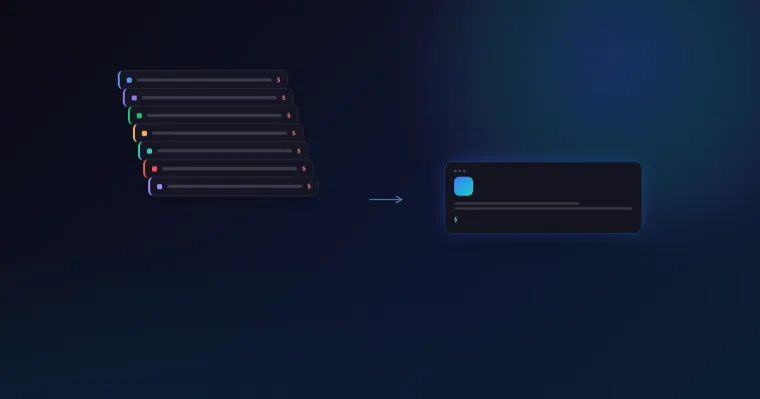
Every arrow between those steps is a seam — and seams are where things slip. The more you grow, the more seams you have, and the more of your day you spend being the human glue holding them together.
The integration tax
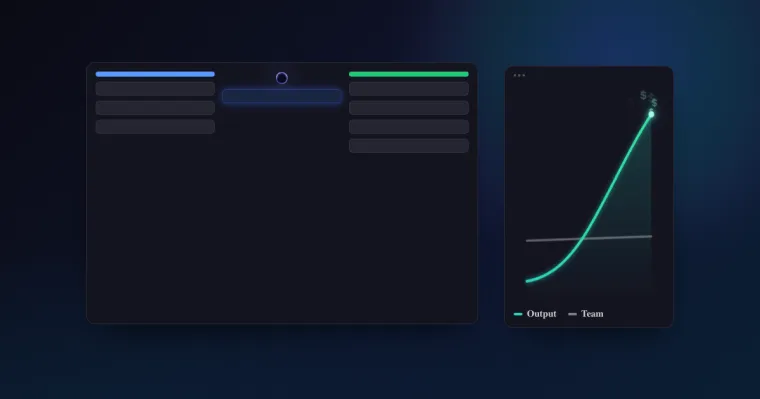
You don't notice the cost because it's paid in small change: a re-typed contact here, a "did anyone reply to Acme?" there, a follow-up that lived only in someone's head. But it adds up. People switch between apps over a thousand times a day, and context-switching can quietly eat up to 40% of productive time.1 For a billable team, that's not a productivity stat — it's margin.
The fix isn't more discipline or another tool. It's fewer seams — putting the inbox, the CRM, the board and the calls in one place that shares context automatically.
A 2-minute audit: the 5 seams
Want to find your own leaks? Walk one real client request through your shop and ask the smell-test at each seam. If the honest answer is "it depends who's around," that seam is leaking.
- Inbox → CRM. A client emails. Does it become a record automatically, or does it depend on someone remembering to log it?
- CRM → board. A deal turns into work. Does a project actually get created, or is it a mental note until someone chases it?
- Board → call. A task needs a conversation. Does the call get made and logged against the client — or does it vanish into someone's phone?
- Call → follow-up. The call ends with a promise. Is the next step written down and owned, or is it "I'll remember"?
- Follow-up → owner. The follow-up comes due. Does someone get nudged automatically, or does it rely on a human noticing?
Most shops leak at seams 1, 4 and 5 — the hand-offs that depend on memory. That's where the "any update?" emails come from.
The one change that closes the gaps
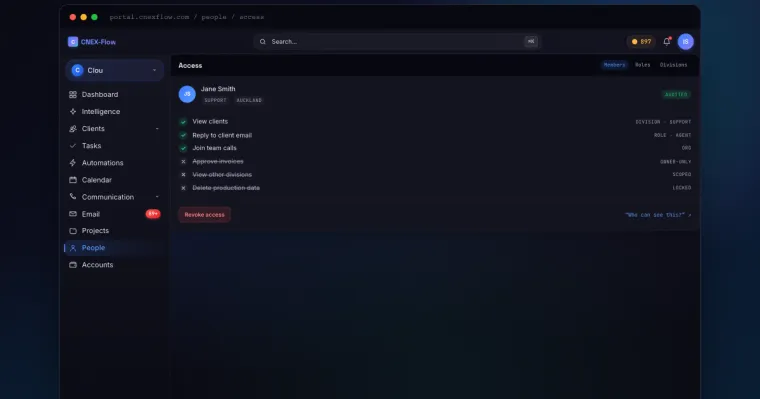
When the email, the client record, the project and the calls all live in one system, the follow-up can't fall between tools — because there's no "between." The next step is attached to the client, visible to the whole team, and surfaced the moment it's due.
What it looks like on a busy Tuesday
You don't go hunting for the dropped ball. It comes to you — before the client notices.
That's the whole idea behind CNEX-Flow's front office: remove the seams, and the dropped ball has nowhere to fall. If "nothing slips through the cracks" is the feeling you're after, see how it works for IT teams — or, if it's the sheer number of tools that's the real problem, count what your stack is costing you.
Close the gaps in your shop
See how CNEX-Flow puts your clients, projects and calls on one timeline — so the follow-up can't slip.
Footnotes
- Sourced from published context-switching research; figures are indicative, not a measured CNEX-Flow benchmark. ↩
The CNEX team
We build CNEX-Flow in the open — and run our own business on it. Read the build story →
See CNEX-Flow run your shop.