How we built CNEX-Flow in three months with an AI engineer
CNEX-Flow was built by Connekz — our AI engineering teammate — with our team reviewing every pull request. Here's the exact working pattern, honestly, including what it doesn't do.

People ask how a team this small shipped a platform this big this fast. The honest answer: we built Connekz — our AI engineering teammate — first, then used it to build the rest of CNEX-Flow, with our team reviewing every pull request.
It's not magic, and it isn't "fire your engineers." It's a working pattern you could run tomorrow. Here it is, warts and all.
The working pattern
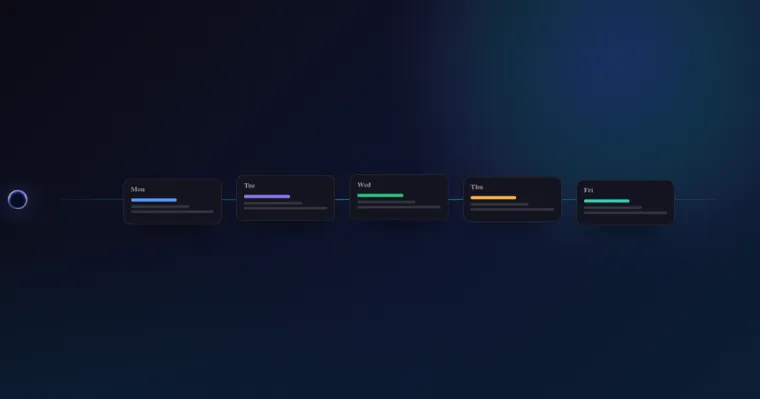
It's the same loop you'd run with any developer — just faster on the predictable parts:
- Plan. A human writes a task with clear acceptance criteria.
- Execute. Connekz reads the criteria and the codebase, writes the tests, then the implementation.
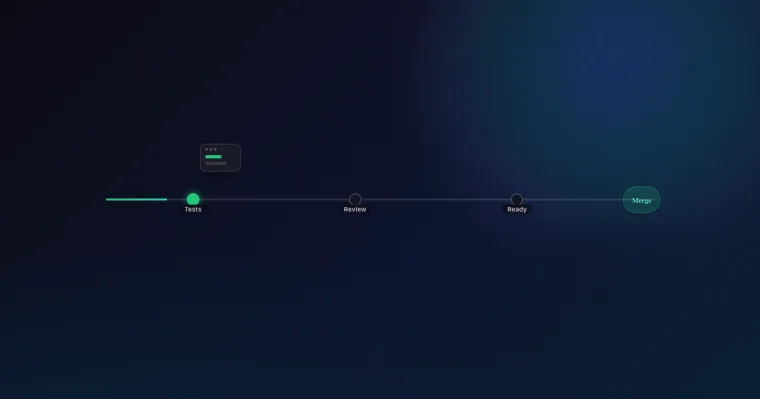
- Review. It runs the suite and opens a PR. A human reviews and merges.
- Repeat. It remembers what went wrong last time and doesn't repeat it.
The whole thing hinges on step 3. Connekz opens a pull request — you review it and merge. You're the project manager; it's the developer.
A real task, start to finish
Take a routine one: "Build a CSV contact-import page with column mapping and validation." Clear, well-specified, the kind of work that quietly eats a senior's afternoon.
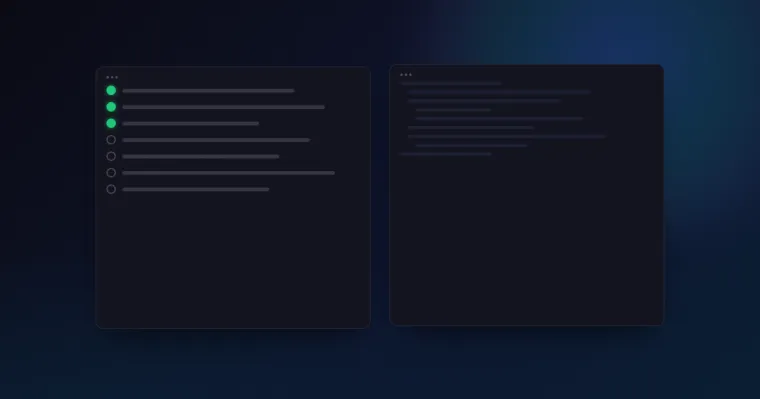
Connekz pinned the behaviour with tests, wrote the implementation, ran lint + types + the full suite, and opened a PR with the diff. We reviewed it like any other. That's most of CNEX-Flow: the CRM, the boards, the unified call threads, the post-call summaries — shipped this way, reviewed by a human.
// The task, the way Connekz reads it: acceptance criteria first.
export interface Task {
  title: string
  acceptanceCriteria: string[]
  // Tests are written against these BEFORE the implementation.
}
The non-negotiable: you review every PR
Speed without review is just faster mistakes. So the rules never bend:
- Tests first. "Done" means proven, not hopeful.
- Quality-checked before it lands. Work passes a multi-stage review before it reaches your queue.
- You merge. Nothing reaches main without a human saying yes — and only ever within the access you've granted it.
That's why the output is worth reviewing instead of being a pile of "almost right." See how the AI engineer works →
What it doesn't do
We're upfront about the edges — it's the honest part, and the useful one:
- Vague tasks get vague results. It pauses and asks rather than guessing, but garbage in still slows things down.
- It won't make product calls. Architecture and trade-offs are human work.
- Net-new, fuzzy R&D is where your seniors shine. Hand Connekz the well-defined work so they can stay on the hard problems.
We keep a running, public list of the limits. See what Connekz can't do →
Why this matters for your shop
You don't need to build a platform to use this. The same loop — write a clear ticket, let Connekz ship the predictable work, review the PR — gives a 5-person shop the throughput of a much larger one, without the hiring. That's the whole pitch, and we're the proof: we run our own company on it.
Put an AI engineer on your board
Assign a card, get a tested PR, and review every change before it lands — or read the longer build story.
The CNEX team
We build CNEX-Flow in the open — and run our own business on it. Read the build story →
See CNEX-Flow run your shop.