The real cost of running your shop on seven disconnected tools
Your subscriptions are the cheap part. The real bill for a stack of disconnected tools is the time your team loses jumping between them — here's how to count it.

It never starts as seven tools. It starts as a CRM. Then a project tool, because the CRM's tasks were clunky. Then a chat app, a phone system, a password manager, a shared drive, a form builder. Each one was "just $12 a seat." None of them talk to each other.
That's the trap: the stack creeps, and the cost hides.
The visible cost vs the real one
The subscriptions are the part you can see — and they're the cheap part. The real bill is paid in time:
- A contact re-typed from the inbox into the CRM.
- "Did anyone reply to Acme?" asked in three different apps.
- A follow-up that lived only in someone's head because no tool owned it.
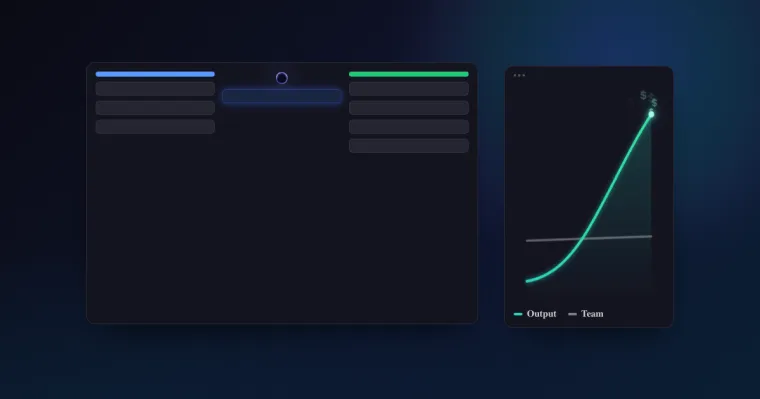
People switch between apps over a thousand times a day, and context-switching can eat up to 40% of productive time.1 On a billable team, that's not a productivity stat — it's margin walking out the door.
A 60-second tally
Want your real number? Don't count dollars — count seams. Multiply it out:
- Tools × seats. Six tools across eight people is 48 separate logins to provision, bill and offboard.
- Switches × minutes. Every hand-off between two tools is a place work slips and time leaks.
- Re-typed records. Every field entered twice is a field that can disagree with itself.
If the total makes you wince, that's the integration tax — and it grows every time you hire.
One platform instead of seven
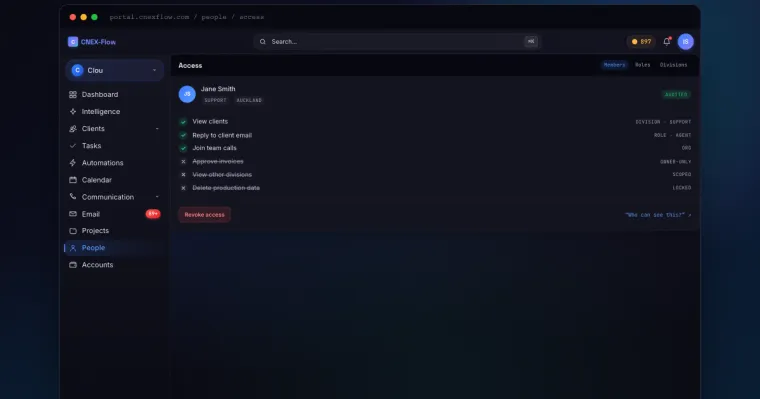
The fix isn't another tool — it's fewer of them. When your CRM, projects, calls and inbox live in one system, the re-typing disappears and the seams close, because there's nothing to bridge.
We built a quick calculator so you can put a number on what your current stack costs versus one platform. Count what your stack is costing you →
See what your stack really costs
Two sliders, your team size and your tool count — and an honest estimate of the time you're leaking.
Footnotes
- Sourced from published context-switching research; figures are indicative, not a measured CNEX-Flow benchmark. ↩
The CNEX team
We build CNEX-Flow in the open — and run our own business on it. Read the build story →
See CNEX-Flow run your shop.